
Why Brown Women Need EMDR Therapy
Why Therapy Didn’t Work (And Why That’s Not Your Fault)
As a licensed therapist who works with Brown women, I get clients who come to me because they’re willing to give therapy another chance. They’ve been in therapy before, but they feel like they failed therapy. But most of the time, this is usually because their former therapist didn’t understand their experiences.
Many Brown women enter therapy already questioning themselves. We’re used to being “the good girl,” the responsible one, the one who holds everything together and makes our families and communities look good. So when therapy doesn’t work, it’s easy to assume we are the problem: that we’re not open enough, not vulnerable enough, not doing the work “correctly.”
But here’s the truth most therapists never name: Therapy was not built with Brown women in mind.
The Limits of Therapy for Brown Girls
Traditional talk therapy often focuses on:
Verbal processing (like typical talk therapy)
Cognitive insight (or just being focused on your thoughts)
Individual autonomy (while ignoring the importance of community)
Logical reframing (that can look like toxic positivity)
For some people, this works beautifully. But for many Brown women raised in immigrant households, pain isn’t just stored only in our thoughts, and we can’t just make them “go away” through the power of positive thinking. It’s our everyday experience. It lives in our environments. It lives in what we were taught to suppress. It lives in the chronic guilt, hypervigilance, emotional shutdown, and fear of disappointing others.
You may have talked about your childhood endlessly but still freeze when your mom calls. You may understand your anxiety logically but still feel your chest tighten for no clear reason. You may know your parents “did their best” and still feel hurt, angry, or numb.
Western therapy often asks, “Why do you feel this way?” But trauma-informed and culturally responsive therapy asks, “What happened to you? What happened to your nervous system?”

What is EMDR Therapy?
Eye Movement Desensitization and Reprocessing (EMDR) is a type of therapy that regulates the part of your brain that stores traumatic memories and emotions. It’s the recommended treatment for PTSD and complex PTSD, but can be used for navigating cultural guilt and shame, bicultural identity, relationship anxiety, and intergenerational trauma.
EMDR is right for you if:
You’re struggling with cultural guilt and shame
You’re straddling bicultural identity and the stressors of two cultures
You’re anxious in your relationships with your parents and cultural community
You feel stuck breaking the cycle of intergenerational trauma
Talk therapy or CBT didn’t help decrease the intensity of your anxiety
You don’t need a formal PTSD diagnosis to benefit from EMDR therapy. Many Brown girls benefit from EMDR because of intergenerational trauma.
Brown Women and Intergenerational Trauma
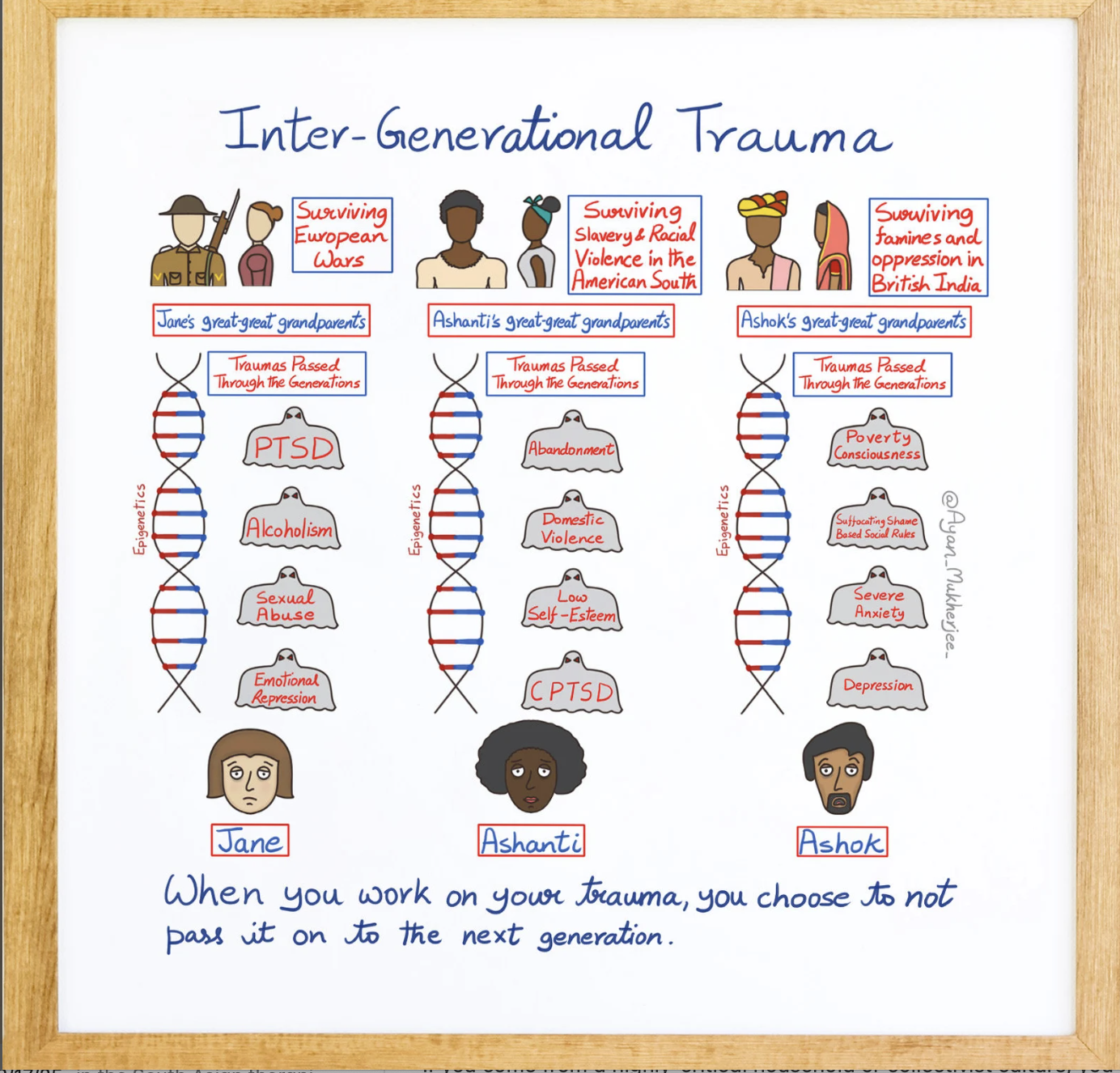
Intergenerational trauma is not just something that happened before us. It’s something many of us live with every day. It’s something that the people around us in our communities live with every day. The problem is that nobody else seems to be aware of it except you.
For South Asian communities and other Brown immigrant families, trauma is often layered:
Colonization and systemic oppression
Forced migration or displacement
Poverty, war, or political violence
Religious persecution or caste-based harm
Loss of homeland, language, and safety
These experiences shaped how our parents and generations before us learned to survive. This survival required emotional suppression, denial, deflection control, silence, and endurance in order to keep pushing through.
As children of immigrants, many of us were raised with messages like:
“Don’t talk back. You’re disrespecting your elders.”
“Don’t air family issues and bring dishonor to your family.”
“Why can’t you just be grateful for what you have?”
“Other people have it worse than you.”
“Just think positive.”
This unsolicited advice is meant to be helpful, but it actually teaches us to live in denial and suppress how we really feel. While these messages may have come from love or fear, they teach us to disconnect from ourselves.
How Intergenerational Trauma Shows Up for Brown Women
Many Brown women experience:
Chronic guilt when prioritizing their own needs
Anxiety around rest, joy, or ease
Perfectionism and fear of failure
People-pleasing and emotional fawning
Difficulty trusting themselves
Emotional numbness or overwhelm
Feeling responsible for parents’ emotions
And yet, many therapy spaces fail to hold this complexity. Brown women are often told to “set boundaries” without acknowledging the cultural, emotional, and survival-based consequences of doing so. Or they’re encouraged to challenge thoughts without addressing the nervous system responses underneath them. This is why culturally responsive therapy isn’t optional, it is essential.
EMDR therapy doesn’t require Brown women to abandon their culture to heal, or to choose Western freedom over collectivist values. Instead, it allows healing to happen in a way that honors both context and lived experience.
Graphic by Ayan Mukherjee at TherapyIllustrated on Etsy
How EMDR Works for Brown Girls
EMDR uses bilateral stimulation, such as guided eye movements, tapping, or alternating sounds to help stimulate both sides of the brain while focusing on a memory, belief, or sensation.
Unlike traditional talk therapy:
You don’t have to explain every detail
You don’t have to relive trauma verbally
You don’t have to force positive thinking
Your brain leads the process, and your trained EMDR therapist supports safety and pacing.
EMDR follows an eight-phase framework, which makes it especially grounding for clients who feel overwhelmed easily. Some key elements include:
History & Cultural Context: Understanding your background, family dynamics, and experiences and how they impact your daily stressors.
Resourcing: Building coping tools and nervous system regulation before touching trauma
Target Identification: Identifying memories or themes connected to your current struggles, such as comparison, fear of disappointing your parents, and believing that you’re a “bad” daughter.
Reprocessing: Using bilateral stimulation to help process negative memories and current triggers to allow healing to unfold
Integration: Strengthening new beliefs and checking in with your body as you’re integrating new beliefs and experiences.
EMDR is collaborative, consent-based, and adaptable, which is crucial for Brown girls who have often had their autonomy overlooked. EMDR is not about getting you to fit the model; EMDR is designed to fit you.
What Brown Women Come to EMDR Therapy For
Many Brown women seek EMDR when they’re tired of “understanding” but still feeling stuck. You might be a great fit for therapy if emotional awareness and insight isn’t enough to help you.
Common themes include:
Intergenerational trauma
Childhood emotional neglect
Being the parentified daughter
Anxiety and panic around failure and making mistakes
Depression and emotional numbness to current events
Religious or cultural trauma that reinforce abuse and patriarchal norms
People-pleasing and boundary struggles
Perfectionism and burnout
Shame and low self-worth
EMDR is especially effective when talk therapy has helped you make sense of your experiences, but not release them. EMDR helps you gently confront the things that hurt you.
Positive Outcomes of EMDR for Brown Women
Brown women who experience EMDR often describe the changes as quiet but life-altering. Instead of forcing confidence or repeating affirmations, healing shows up naturally in how your body responds, how your emotions move, and how self-trust grows.
Many Brown women notice nervous system relief, emotional shifts, and are able to reframe negative core beliefs. This can look like:
Less anxiety and hypervigilance (that “on edge” feeling)
Reduced emotional reactivity with family
Fewer panic responses around making mistakes
Better quality sleep
Feeling emotions without being overwhelmed
Release long-held cultural shame and guilt
Grieve what they didn’t receive without self-blame
These shifts matter because many Brown women were never given permission to feel fully.
Doing Something Unfamiliar Isn’t Wrong
Trying something new can feel risky. You may have been taught to endure discomfort, minimize pain, or stay loyal even when it hurts. But choosing EMDR therapy doesn’t mean you’re weak, or that you’re failing at therapy. And it doesn’t mean you’re doing “too much”, or that you’re not enough for healing. It means you’re listening to yourself.
Interested in trying EMDR therapy? Book a free intro call to explore whether I’m the support you’ve been missing. This is a gentle, no-pressure conversation where we can talk about what you’ve tried, what hasn’t worked, and what healing could look like for you.

Hi there! I’m Tracy and I’m “The Bad Indian Therapist”.
I’m an EMDR Certified™ licensed therapist in New York, New Jersey, and California who helps you stop letting cultural guilt and shame take the wheel and embrace your desires!
If you’ve been questioning the things you’ve been told, you’ve come to the right place.
Book a call with me and let’s see if I’m a good fit for you.