
Why Eating Disorders Aren’t About Body Image for Brown Girls
The prevalence of Eating Disorders in Brown Women
If you’re a Brown woman coming to therapy for help, it’s probably not for an eating disorder, even if you know you have one. Instead, you’re coming to therapy because you want to reclaim your life. As a licensed therapist who is also a Brown woman and the daughter of immigrant parents, I get it. My relationship with food and body was almost never the focus in my personal therapy experience. But it was something that came up alongside guilt, shame, and disgust in other areas of my life.
In many Brown families, eating disorders are dismissed as a “white girl disorder,” misunderstood as vanity, or outright denied as something that could ever happen “in our community.” In fact, many Brown communities don’t believe that it’s an issue that’s relevant to us. Mental health struggles and disordered eating are often reframed as a lack of gratitude or resilience. This silence doesn’t protect us. It isolates us.
This is why it’s so important to say this clearly: eating disorders for Brown girls aren’t always about body image. Often, they’re about control, shame, disgust, autonomy, and survival. And when we understand that, healing becomes possible.

Stereotypes about Brown Women with Eating Disorders
Let’s challenge a few stigmatizing narratives:
Eating disorders are not always about wanting to be thin
You don’t have to be white to have an eating disorder
Not everybody who has an eating disorder is thin
Not everybody with an eating disorder wants to lose weight
You don’t have to hate your body to have an eating disorder
You can be successful, high-achieving, and still have an eating disorder
You can love food and still have an eating-disorder
Eating disorders and disordered eating affect women across races, cultures, and body sizes. According to the National Eating Disorder Association, research shows that women of color experience eating disorders at rates comparable to white women, sometimes even at higher rates, yet they are significantly less likely to be diagnosed, referred to care, or taken seriously by providers.
Eating Disorders Mean Freedom for Brown Girls
Many Brown American women grow up believing that control is freedom. When your life has been shaped by constant monitoring, comparison, and expectations, control becomes a survival strategy, not a flaw. For many Brown cultures, control is the power dynamic that’s present in family interactions.
In immigrant households, especially for eldest daughters, autonomy is often restricted early on. Privacy is limited. Independence is conditional. Obedience is rewarded. You’re told that you’ll finally have freedom once you’re married.
In these environments, autonomy can feel dangerous or “selfish”. So instead, control becomes the substitute. Our parents cope with anxiety through controlling us. We learn how to cope with anxiety by controlling what we eat, how we eat, how much we eat, and what we do with the food we ate later.
Eating disorder behaviors can offer a false sense of freedom:
“This is mine and mine only”
“No one else gets to decide this”
“This is how I take up space without asking permission”
“This is the one area of my life I get to have decisions for myself”
But control is not the same as freedom. Control is rigid and punishing. Autonomy is flexible and compassionate. Control narrows your world; autonomy expands it. Autonomy is about letting go of control, and learning how to live without grasping onto it.
Understanding this distinction through a trauma-informed and culturally responsive lens helps shift the question from “What’s wrong with me?” to “What happened to me?”, and “What am I trying to protect?”
Eating Disorder Symptoms for Brown Women and Girls
For Brown women and girls, an eating disorderis not the root problem, but a symptom of much larger ones. An eating disorder is a coping strategy to something much deeper.
For many daughters of immigrants, food becomes a language when emotions were never allowed to be spoken. Eating disorders are not about vanity; they’re about regulation. They are attempts to manage anxiety, numb emotional pain, create predictability, or reclaim a sense of power in controlling environments.
For many Brown women, having freedom and autonomy feels like a privilege. When we try to exercise autonomy in our lives, our communities and families meet us with resistance. Freedom is treated as a “Western” concept.
Shame and disgust are symptoms of eating disorder patterns. Shame tells you that something is inherently wrong with you. Disgust creates distance from your body, your needs, your hunger, your desires. Control steps in as a promise of relief: If I can just do this right, I’ll finally feel safe.
Brown Girl Shame and disgust
Shame is often the emotional inheritance of immigrant households, even when love and sacrifice are present. Many adult daughters of immigrants grow up internalizing the belief that their worth is conditional and dependent on achievement, respectability, and compliance.
Cultural expectations around gender, success, and femininity can amplify this shame. Brown women are expected to be grateful, selfless, thin (but not too thin), curvy (but not curvy in the wrong places), ambitious (but not intimidating), modern (but not disrespectful to the culture), traditional (but not so traditional that you stick out like a sore thumb in America). These contradictions create a constant sense of failure and never feeling culturally “enough”.
Colorism plays a particularly harmful role. Messages that lighter skin is more desirable or worthy can deeply impact body image and self-worth. Or, that you’re allowed to be dark, but you can’t be dark and in a bigger body at the same time. For many Brown women, disgust towards their bodies isn’t just personal, it’s cultural, historical, and rooted in racist perceptions that Brown bodies are disgusting.
Eating disorders can emerge as attempts to manage this disgust. To disappear, become acceptable, fit in, and control what feels uncontrollable. None of this means you’re weak. It means you’re trying to adapt in a world that forces you to assimilate to survive.
What Eating Disorder Support for Brown Women Looks like:
A culturally responsive therapist understands that eating disorders don’t exist in a vacuum. They are shaped by family systems, cultural values, racism, immigration stress, and intergenerational trauma.
Rather than making food the sole focus, therapy focuses on:
Control: How does control dictate decision-making in your relationships, including the one you have with yourself?
Shame: What shame-based narratives are hard for you to sit with?
Disgust: What parts of your identity evoke disgust?
Anxiety: How do you sit with the fear of uncertainty and the unknown?
Identity conflict: What does it mean to be “Brown” enough? “Too Brown”?
Eating disorder symptoms are assessed and held with care, but they are not treated as the entirety of who you are. A culturally informed therapist might explore:
Your guilt and boundaries in family relationships
Anxiety in romantic and platonic friendships and relationships
Perfectionism and imposter syndrome at work and in career
How you compare yourself to other Brown women in your community
Your fear of taking up space and criticism
By addressing these root issues, eating disorders can soften naturally. Healing becomes integrated into your whole life, not confined to food logs or weight goals.
Progress, not perfection
Being a Brown woman with an eating disorder does not mean you are broken. You’re probably coming to therapy because you need help establishing your own life separate from your parents. Working on core themes of control, shame, and guilt can indirectly address your eating disorder.
Recovery is not about perfection. You don’t have to love your body. You don’t have to give up control all at once. And you don’t have to have everything figured out before asking for support.
Progress with culturally responsive eating disorder support might look like:
Curiosity instead of judgment
Choice instead of compulsion
Compassion instead of shame
Informed decision-making instead of obedience
Do you want more autonomy over your life? Book your free intro call if you’re interested in trauma-informed and culturally responsive therapy support for eating disorders. This is a gentle first step; no pressure, no commitment, just space to explore what culturally-informed healing can look like for you outside of the Western lens.
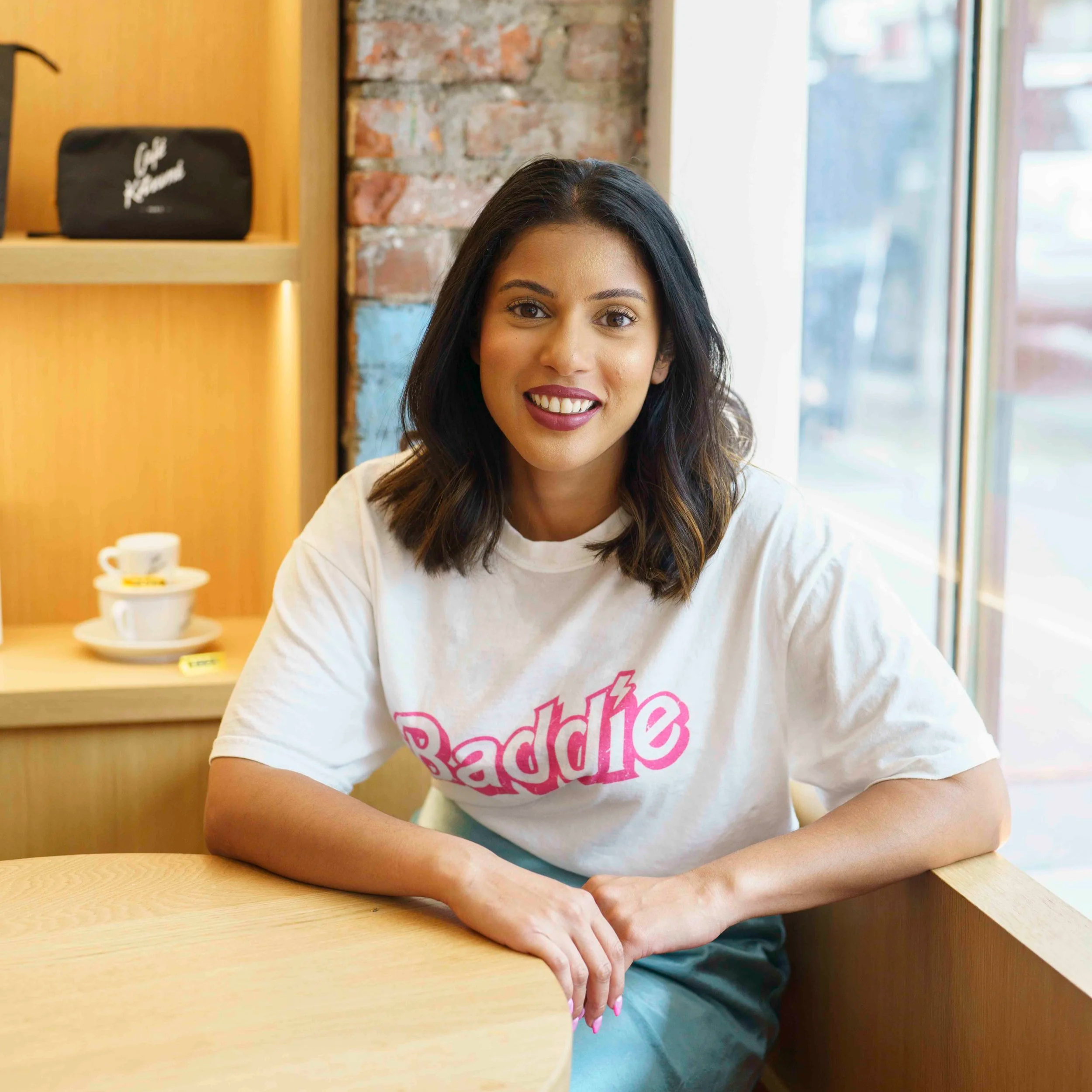
Hey there! I’m Tracy and I’m The Bad Indian Therapist!
I help Brown women who struggle with chronic guilt, shame, and self-abandonment stop letting cultural guilt and shame take the wheel and help you embrace your desires!
If you’ve been questioning the things you’ve been told, you’ve come to the right place. Book your free intro call to get started. Let’s see how I can help you on your journey towards freedom!